
The NFL was thrown into immediate turmoil ahead of Super Bowl LX when Patriots head coach Mike Vrabel issued a stunning ultimatum that few could have anticipated. In a tense media appearance, Vrabel declared that either referee Shawn Smith would be replaced, or the New England Patriots would refuse to take the field. The statement was delivered calmly but carried unmistakable force, signaling that the situation had reached a breaking point in Vrabel’s eyes. Within minutes, the comment dominated headlines across sports networks and social media platforms.
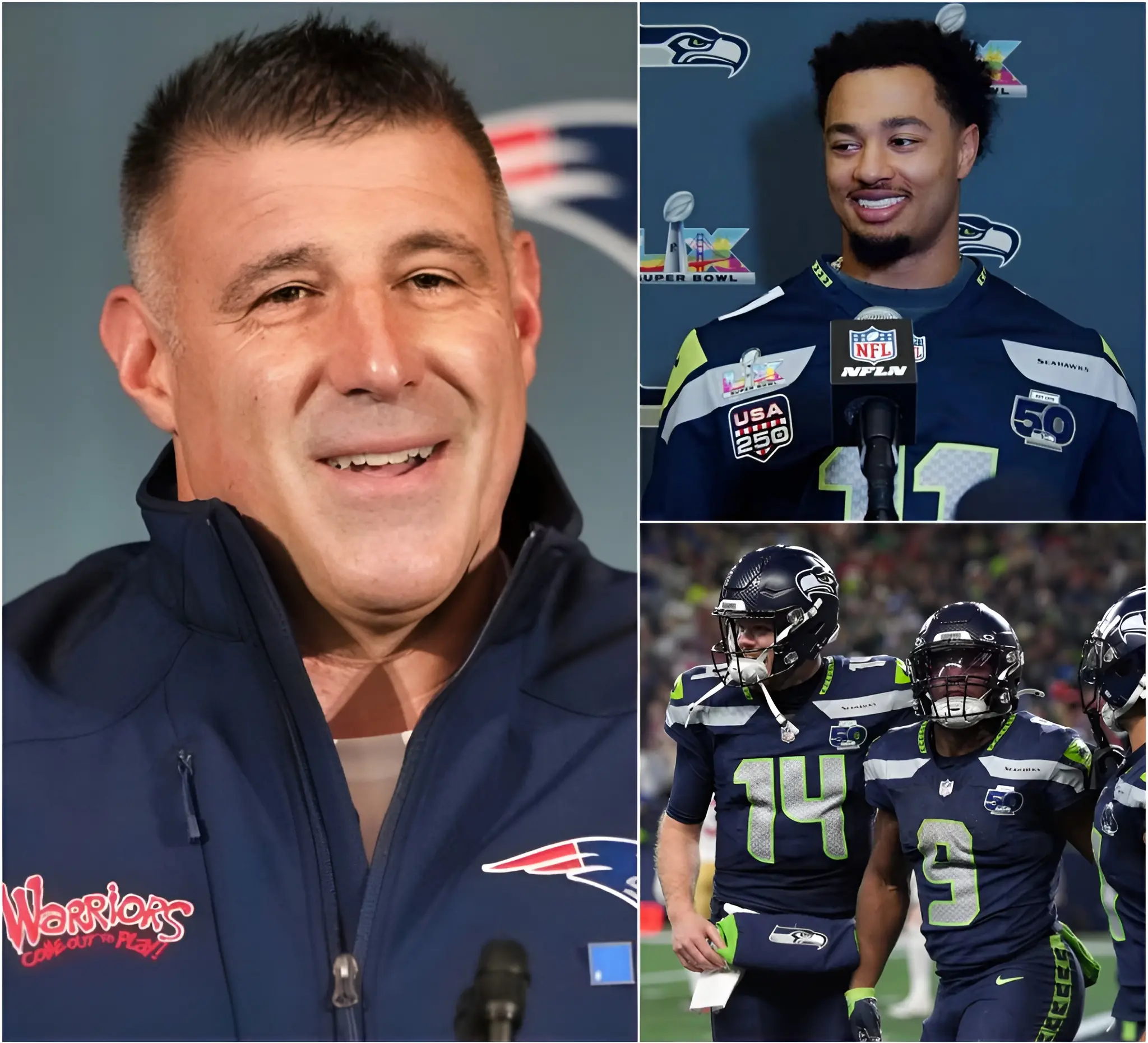
Vrabel justified his stance by pointing to what he described as a troubling pattern in Shawn Smith’s officiating history. According to the Patriots coach, Smith had repeatedly made calls that disproportionately harmed New England in high-stakes games. Vrabel referenced controversial penalties, disputed judgment calls, and moments where officiating decisions appeared to shift momentum at critical junctures. While he stopped short of accusing deliberate misconduct, his implication was clear: trust had been eroded. For Vrabel, allowing Smith to officiate the Super Bowl was unacceptable.
The seriousness of the accusation lay not just in its content, but in its timing. Super Bowl LX represents the pinnacle of the NFL season, watched by millions around the world. Any hint that its integrity could be compromised carries enormous weight. Vrabel emphasized that this was not about seeking an advantage, but about ensuring a level playing field. He framed his ultimatum as a stand for fairness, one he felt obligated to take on behalf of his players and the organization.
Media reaction was immediate and explosive. Analysts debated whether Vrabel’s move was courageous or reckless, with opinions sharply divided. Some praised him for voicing concerns many coaches keep behind closed doors. Others criticized the tactic as inappropriate pressure on the league, arguing that public ultimatums undermine institutional trust. The story quickly eclipsed traditional Super Bowl coverage, turning what is usually a week of celebration into a storm of controversy.

Former referees were soon invited onto broadcasts to weigh in on the situation. Many explained that while officiating crews are thoroughly vetted, no referee is immune to scrutiny. Some acknowledged that certain officials develop reputations based on past games, fair or not. However, most cautioned against singling out one referee without definitive evidence. The discussion underscored how perception can become as powerful as reality in professional sports.
Inside the Patriots organization, Vrabel’s comments reportedly reflected a broader internal frustration. Players and coaches alike had privately expressed concerns about officiating consistency throughout the season. While the team had not previously made public complaints, the stakes of the Super Bowl appeared to push Vrabel to act. For him, silence was no longer an option. The message was clear: New England would not compromise on what it believed to be fair competition.
The NFL league office found itself in an unenviable position. Responding too forcefully could escalate tensions, while remaining silent risked appearing indifferent. Officials reiterated their confidence in the league’s officiating standards and emphasized that Super Bowl referees are selected based on performance evaluations. No immediate announcement was made regarding any changes. The careful wording of the response suggested a desire to calm the situation without conceding ground.
As the controversy unfolded, attention turned toward the opposing sideline. Seahawks players and coaches were asked repeatedly for their reactions, most of whom initially declined to comment. However, it wasn’t long before Seahawks star wide receiver Jaxon Smith-Njigba broke the silence. In a brief but pointed remark, he dismissed the ultimatum and refocused attention on the game itself. Though only a single sentence, its tone was unmistakably sharp.
Smith-Njigba’s comment spread rapidly across social media, clipped and reposted thousands of times within hours. Fans interpreted it as a challenge, while others saw it as a refusal to be drawn into off-field drama. Regardless of intent, the remark added fuel to an already raging fire. What began as a dispute over officiating had now evolved into a psychological battle between two Super Bowl contenders.

Seahawks fans rallied around Smith-Njigba, praising his confidence and composure. To them, the response embodied a “next play” mentality, focusing on preparation rather than controversy. Patriots fans, meanwhile, viewed the remark as dismissive and inflammatory. The divide between fanbases widened, turning online discussions into heated debates. Neutral observers watched as the narrative continued to spiral.
Former players weighed in with mixed perspectives. Some supported Vrabel’s willingness to confront the league, noting that officiating concerns have long simmered beneath the surface. Others warned that such public pressure sets a dangerous precedent. Several veterans emphasized that players are taught to overcome adversity, including questionable calls. Yet even they acknowledged that trust in officiating is essential, especially on the sport’s biggest stage.
As Super Bowl week progressed, the storyline refused to fade. Press conferences were dominated by questions about referees rather than matchups. Analysts speculated about potential behind-the-scenes negotiations between the league and the Patriots. Every minor development was scrutinized for hidden meaning. The focus on football strategy was increasingly overshadowed by institutional tension.
For the Patriots players, the situation created a delicate balance. On one hand, they appreciated their coach’s willingness to advocate for them. On the other, they recognized the risk of distraction. Team leaders reportedly emphasized maintaining focus and blocking out noise. Preparation continued as scheduled, with coaches reinforcing the importance of controlling what could be controlled.
The Seahawks, meanwhile, adopted a contrasting posture. Their messaging centered on readiness and respect for the process. Coaches avoided engaging with the controversy, redirecting questions back to game preparation. Smith-Njigba’s brief remark stood as the lone exception, a flashpoint that intensified the rivalry. Beyond that, the Seahawks appeared determined not to let external drama alter their approach.
The broader implications of the episode extended beyond Super Bowl LX. Observers began asking whether the league should reconsider how officiating assignments are communicated. Transparency became a recurring theme in commentary. Some suggested that clearer explanations could reduce speculation and mistrust. Others argued that increased openness might only invite further scrutiny and pressure.
As kickoff drew closer, uncertainty lingered. Would the NFL make a change, or stand firm? Would Vrabel escalate his stance, or allow the situation to de-escalate? The absence of clear answers kept tension high. Every hour without resolution felt significant. The Super Bowl, usually defined by anticipation and excitement, now carried an undercurrent of unease.
Ultimately, the controversy highlighted the fragile relationship between competition and governance in professional sports. Coaches fight for their teams, leagues defend their systems, and players stand caught in between. Trust, once questioned, is difficult to restore. Whether or not any changes were made, the conversation itself had already left a mark. Super Bowl LX would be remembered not only for what happened on the field, but for everything that unfolded before it.