
The cycling world has exploded into fierce debate after legendary Belgian icon Eddy Merckx made an emotional and highly controversial statement about Jonas Vingegaard — comments that many fans now believe have transformed the Danish superstar into something far bigger than simply a dominant rider inside the peloton.
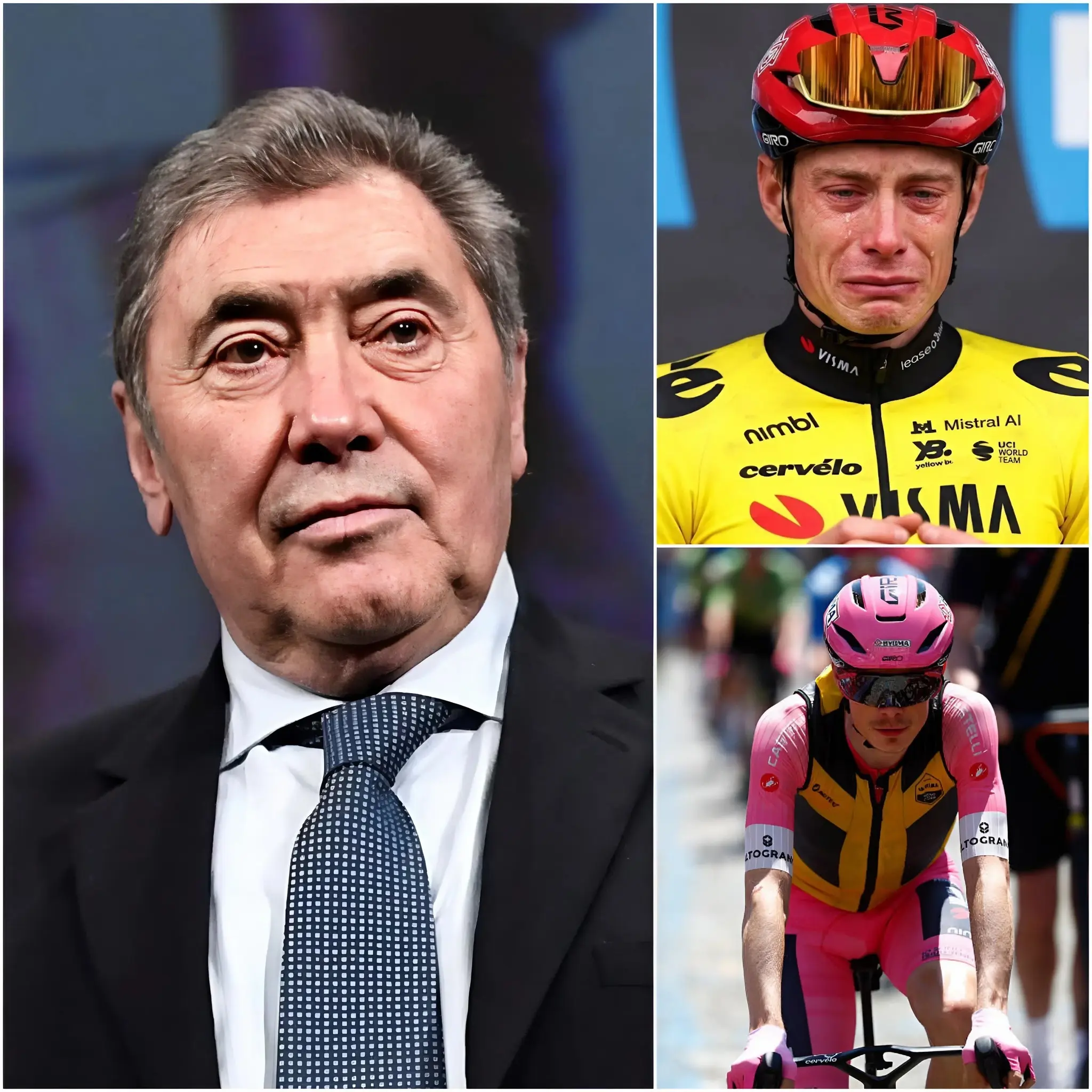
Speaking during a discussion about the modern era of cycling, Merckx reportedly stunned audiences by claiming Vingegaard is no longer merely winning races or collecting trophies.
“Jonas Vingegaard is no longer just winning races… he’s turning himself into a global symbol,” Merckx allegedly declared.
The statement immediately began spreading across social media and cycling communities worldwide.
But what truly ignited the controversy was the reasoning behind Merckx’s emotional praise.
According to reports now circulating online, the Belgian legend specifically highlighted what he described as Vingegaard’s “perfect family man image,” arguing that millions of fans are becoming emotionally attached not only to Jonas the cyclist — but also to Jonas the husband and father constantly seen celebrating victories alongside his wife and children.
Over recent seasons, supporters have repeatedly watched Vingegaard embrace his family immediately after emotional wins, creating images that many fans describe as some of the most wholesome and emotionally powerful moments in modern cycling.
Merckx allegedly argued these scenes are changing the way global audiences connect emotionally with athletes.
“People don’t just admire him anymore,” one report paraphrased Merckx as saying. “They feel emotionally connected to the life he represents.”
That idea instantly divided the internet.
Many cycling fans strongly agreed with the legendary Belgian, arguing Vingegaard’s calm personality, devotion to family, and humble public image have helped separate him from many modern superstars often surrounded by controversy, arrogance, or manufactured celebrity culture.
“He feels real,” one supporter wrote online beneath clips discussing Merckx’s comments. “That’s why people love him.”
Others argued Vingegaard’s growing popularity reflects something deeper happening in modern sport itself — where fans increasingly crave athletes who appear emotionally grounded and authentic beyond competition alone.
Several supporters even claimed the Danish rider has become one of the few sports figures capable of appealing across generations because of the combination of elite performance and visibly strong family values.
But not everyone reacted positively.
Critics argued Merckx’s comments dangerously romanticized public image and family presentation in ways that place unrealistic expectations on athletes and their private lives.
Some supporters questioned why athletes increasingly seem expected to become “symbols” or role models beyond simply competing in their sport.
Others warned that turning Vingegaard into an almost idealized public figure could create enormous psychological pressure both for the rider himself and for his family.
“At some point he’s allowed to just be human,” one commenter argued online during the growing debate.
Others accused fans and media of becoming “obsessed” with carefully curated emotional moments rather than focusing purely on cycling performance itself.
That criticism only intensified after the most shocking part of the story reportedly emerged.
According to multiple reports spreading rapidly online, Merckx allegedly made an extraordinary proposal immediately after praising Vingegaard — one so unexpected that witnesses claimed the Danish superstar himself appeared genuinely stunned.
While exact details remain unclear and heavily debated across cycling communities, several reports claim Merckx suggested Vingegaard now has the potential to become not only the face of modern cycling, but perhaps the defining global ambassador of the sport for an entirely new generation.
Some reports even suggest the Belgian legend floated the idea that Vingegaard’s public image and emotional connection with fans could eventually transcend cycling itself in ways rarely seen since the sport’s biggest historical icons.
That possibility immediately sent social media into absolute chaos.
Supporters flooded comment sections debating whether Vingegaard truly possesses the cultural influence and emotional appeal Merckx allegedly described.
Some fans fully embraced the comparison, arguing the Danish rider’s combination of humility, family image, suffering on the bike, and quiet personality has created a level of admiration that extends far beyond race results alone.
Others strongly rejected the idea, accusing media and fans of exaggerating Vingegaard’s public image into something almost mythological.
“He’s an incredible cyclist,” one critic wrote online. “But turning him into some kind of global symbol feels completely over the top.”
Meanwhile, debate surrounding modern sports celebrity culture has intensified as well.
Several commentators pointed out how increasingly difficult it has become for elite athletes to separate professional success from personal identity in the age of social media, nonstop visibility, and emotional branding.
In previous eras, champions were often remembered primarily for victories and records.
Today, however, many fans form emotional attachments based equally on personality, family life, vulnerability, and perceived authenticity away from competition itself.
That broader shift may explain why Merckx’s comments exploded so intensely online.
Because whether supporters agree or disagree with the legendary Belgian’s perspective, many believe he identified something undeniably true about Jonas Vingegaard’s current status inside global sport:
People are no longer watching him only because he wins.
They are watching because of what they believe he represents.
And now, after Eddy Merckx’s explosive comments pushed that conversation into the spotlight, the debate surrounding Jonas Vingegaard’s image, influence, and emotional connection with fans may be growing far bigger than cycling alone ever expected.
ly transcend cycling itself in ways rarely seen since the sport’s biggest historical icons.
That possibility immediately sent social media into absolute chaos.
Supporters flooded comment sections debating whether Vingegaard truly possesses the cultural influence and emotional appeal Merckx allegedly described.
Some fans fully embraced the comparison, arguing the Danish rider’s combination of humility, family image, suffering on the bike, and quiet personality has created a level of admiration that extends far beyond race results alone.
Others strongly rejected the idea, accusing media and fans of exaggerating Vingegaard’s public image into something almost mythological.
“He’s an incredible cyclist,” one critic wrote online. “But turning him into some kind of global symbol feels completely over the top.”
Meanwhile, debate surrounding modern sports celebrity culture has intensified as well.
Several commentators pointed out how increasingly difficult it has become for elite athletes to separate professional success from personal identity in the age of social media, nonstop visibility, and emotional branding.
In previous eras, champions were often remembered primarily for victories and records.
Today, however, many fans form emotional attachments based equally on personality, family life, vulnerability, and perceived authenticity away from competition itself.
That broader shift may explain why Merckx’s comments exploded so intensely online.
Because whether supporters agree or disagree with the legendary Belgian’s perspective, many believe he identified something undeniably true about Jonas Vingegaard’s current status inside global sport:
People are no longer watching him only because he wins.
They are watching because of what they believe he represents.
And now, after Eddy Merckx’s explosive comments pushed that conversation into the spotlight, the debate surrounding Jonas Vingegaard’s image, influence, and emotional connection with fans may be growing far bigger than cycling alone ever expected.