
BREAKING: NFL’s Legendary Referee Ed Hochuli Reveals Explosive Evidence of a “Rigged Call” That Cost the Ravens a Crucial Win Against the Steelers
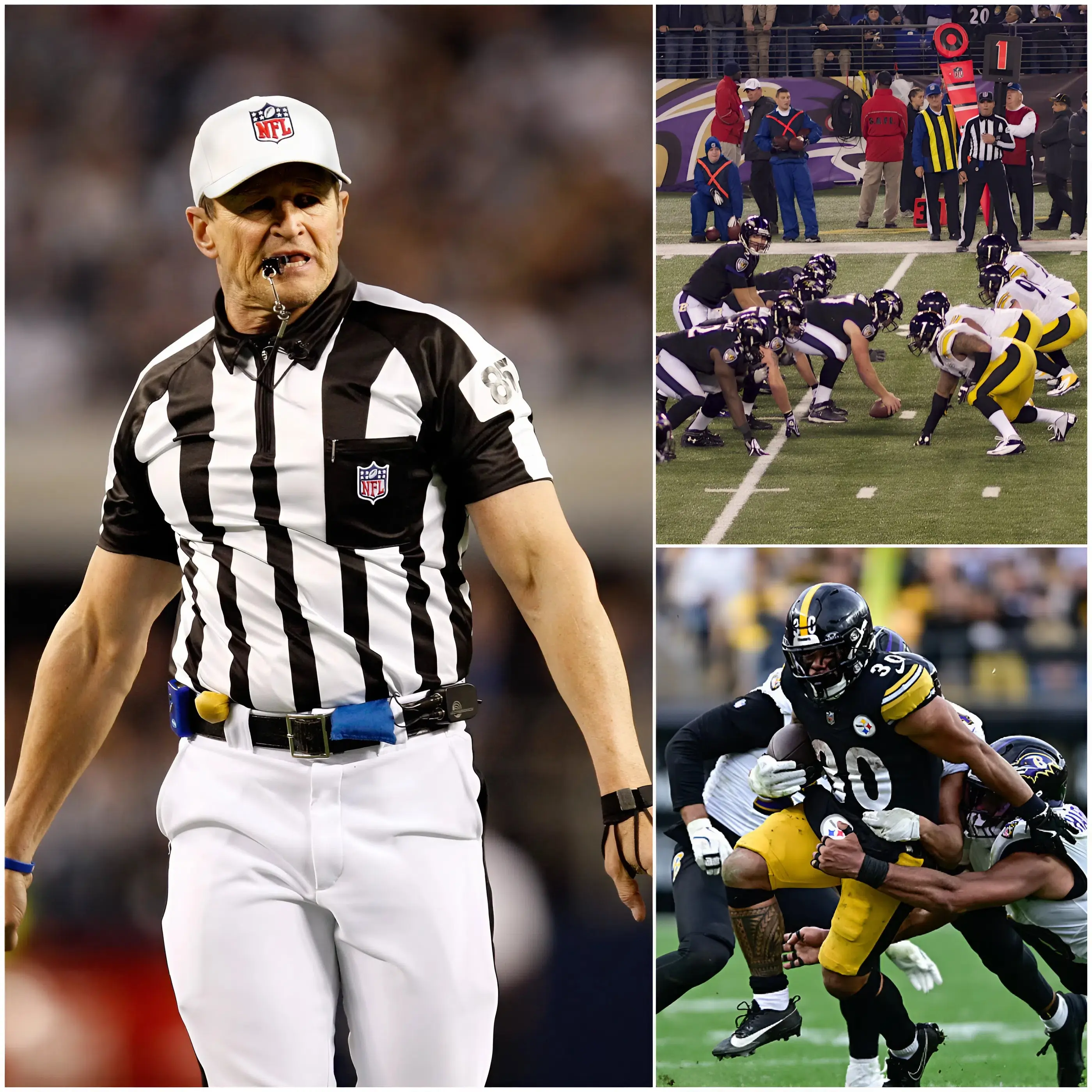
The NFL is once again at the center of a firestorm, and this time the controversy cuts deeper than a blown call or a referee’s missed angle. In a revelation that has stunned fans, analysts, and even former officials, Ed Hochuli — widely regarded as the most respected referee in NFL history — has reportedly come forward with evidence suggesting a critical call in the Baltimore Ravens’ loss to the Pittsburgh Steelers was not just wrong, but potentially manipulated.
For a league that markets itself on parity, fairness, and competitive integrity, the implications are massive.
The game itself was already one of the most talked-about matchups of the season. Ravens vs. Steelers is never just football — it’s history, bitterness, and bruises wrapped into four quarters. Baltimore entered the contest with momentum and playoff positioning on the line, while Pittsburgh was fighting to stay relevant in a crowded AFC race. The tension was high, the margin thin, and the outcome decided by a single, game-altering officiating decision late in the fourth quarter.
That decision — a controversial penalty that erased a key Ravens play — immediately sparked outrage. Replays circulated within seconds. Former players on social media called it “soft.” Analysts labeled it “inexplicable.” Ravens head coach John Harbaugh stopped just short of openly criticizing the officials, but his frustration was unmistakable. Fans, meanwhile, erupted, flooding timelines with slowed-down clips and accusations of bias.

At the time, the NFL dismissed the backlash as emotional overreaction.
Now, that narrative may be collapsing.
According to multiple sources familiar with the situation, Ed Hochuli reviewed the play in question as part of a private officiating analysis and identified irregularities that go far beyond a simple judgment error. Hochuli, who officiated more than 20 NFL seasons and became synonymous with professionalism and rulebook precision, allegedly concluded that the call did not align with league standards — nor with the on-field explanation given by the officiating crew.
More alarming is the claim that internal communication logs and officiating guidance leading into the game may have influenced how that specific situation was handled. While Hochuli has not publicly accused the league of fixing outcomes, his findings reportedly suggest that the referee on the field was operating under instructions that contradicted established enforcement norms.
If true, this would mark one of the most serious officiating controversies in modern NFL history.
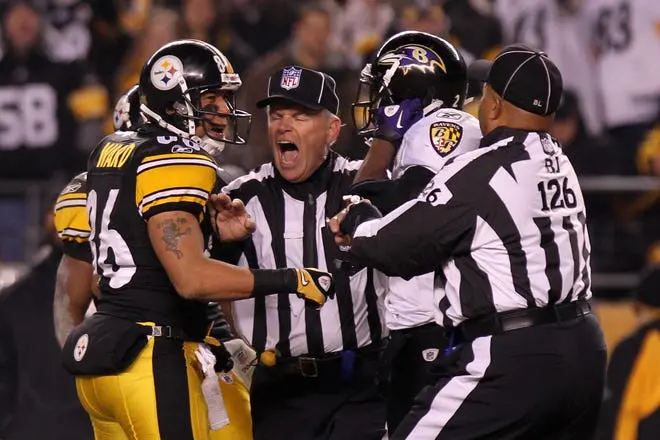
The play itself involved a defensive action by the Ravens that appeared, by rule definition, legal. Contact was minimal, timing was clean, and similar plays earlier in the game — and across the league — had gone unflagged. Yet in this moment, with the Ravens poised to seal the game, a penalty was thrown that extended the Steelers’ drive. Pittsburgh capitalized, flipping the result and walking away with a win that could prove decisive for playoff seeding.
What makes Hochuli’s involvement so explosive is his reputation. This is not a fringe voice or a disgruntled former employee. Hochuli is often cited by the NFL itself as a gold standard for officiating excellence. When he speaks, people listen — including league executives.
Sources say Hochuli’s analysis was shared internally and immediately raised red flags. While the NFL has not issued a formal statement addressing his conclusions, insiders describe “panic” behind closed doors, particularly as pressure mounts from both teams’ fanbases and the broader football community.
The Ravens organization, publicly cautious, is said to be “closely monitoring” developments. Privately, there is growing belief within Baltimore’s front office that the team was wronged in a way that directly impacted its season trajectory. A single win or loss can change playoff matchups, home-field advantage, and even player incentives. In a league built on razor-thin margins, officiating integrity is not optional — it is foundational.
Fans have already taken the issue to the next level. Hashtags questioning NFL fairness began trending within hours of the report surfacing. Longtime supporters are drawing parallels to past officiating scandals and asking uncomfortable questions about league transparency, gambling influence, and narrative-driven outcomes. While there is no direct evidence tying betting markets to this incident, the timing — and the stakes — have only fueled speculation.
The NFL has faced officiating criticism before, but rarely with this level of credibility attached. Typically, the league responds with quiet internal reviews, vague acknowledgments, and a promise to “learn from the situation.” That approach may no longer be enough.
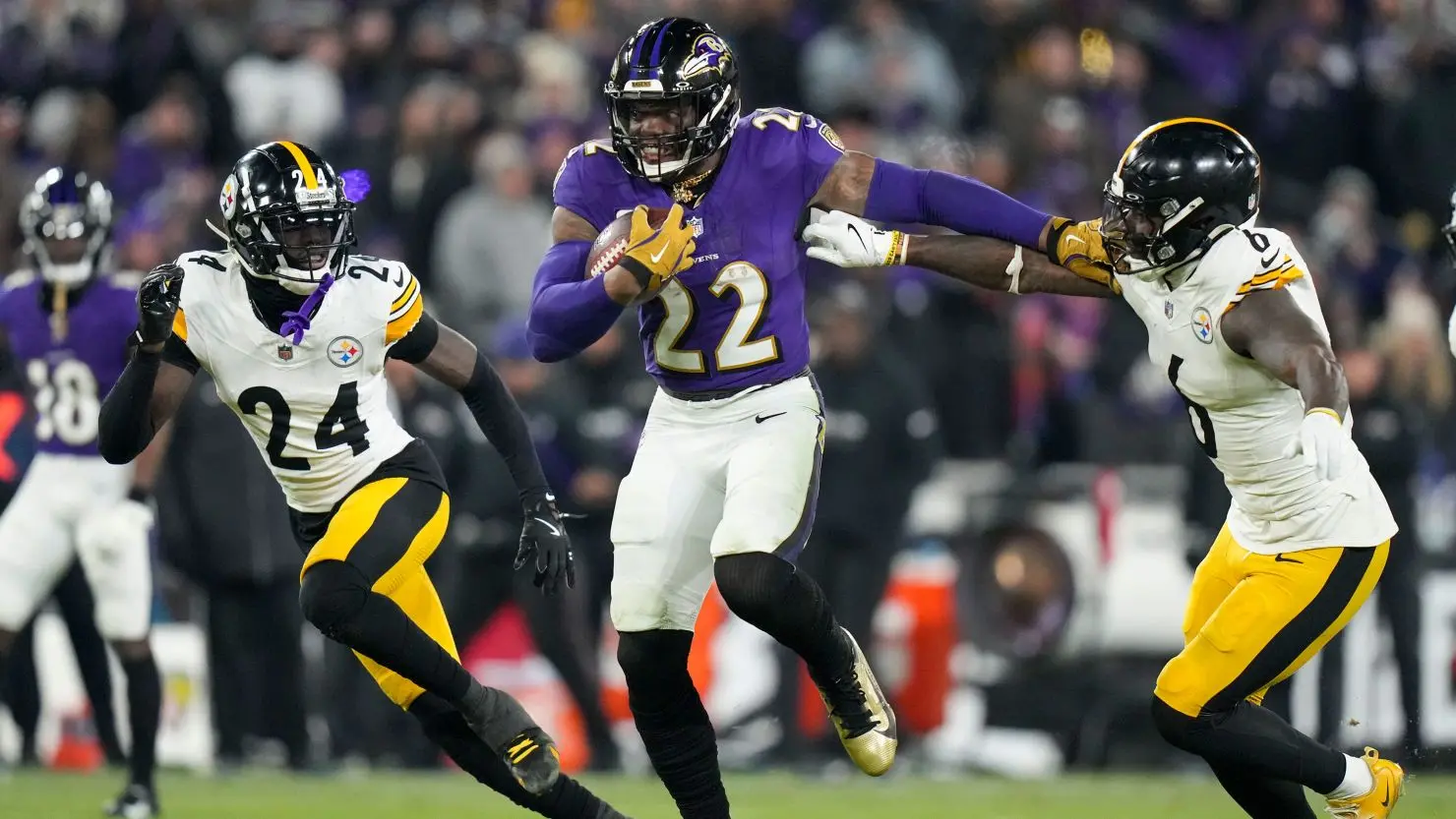
If Hochuli’s evidence becomes public, the league could be forced into unprecedented action: public accountability for officiating crews, clearer disclosure of referee directives, or even retroactive acknowledgment that a game’s outcome was compromised. While the NFL is unlikely to alter standings, the reputational damage could linger far longer than a single season.
For now, the Ravens are left with a bitter loss, the Steelers with a win clouded by doubt, and the NFL with a growing crisis of trust. Fans don’t expect perfection — football is chaotic by nature — but they do expect honesty.
And when the man once trusted to enforce the rulebook better than anyone else raises an alarm, it’s not just noise. It’s a warning.
As the league navigates the fallout, one thing is clear: this story isn’t going away. Not until the NFL answers the question fans are now asking louder than ever — was this just a bad call, or something far worse?