
The days leading up to Super Bowl LX had been filled with excitement, anticipation, and intense preparation for both the Seattle Seahawks and the New England Patriots. The Seahawks, led by their head coach Mike MacDonald, had been preparing tirelessly for this moment, hoping to secure a championship that had eluded them for years. On the other side, the Patriots, under the leadership of star quarterback Drake Maye, were determined to defend their title and prove once again that they were the dominant force in the NFL.
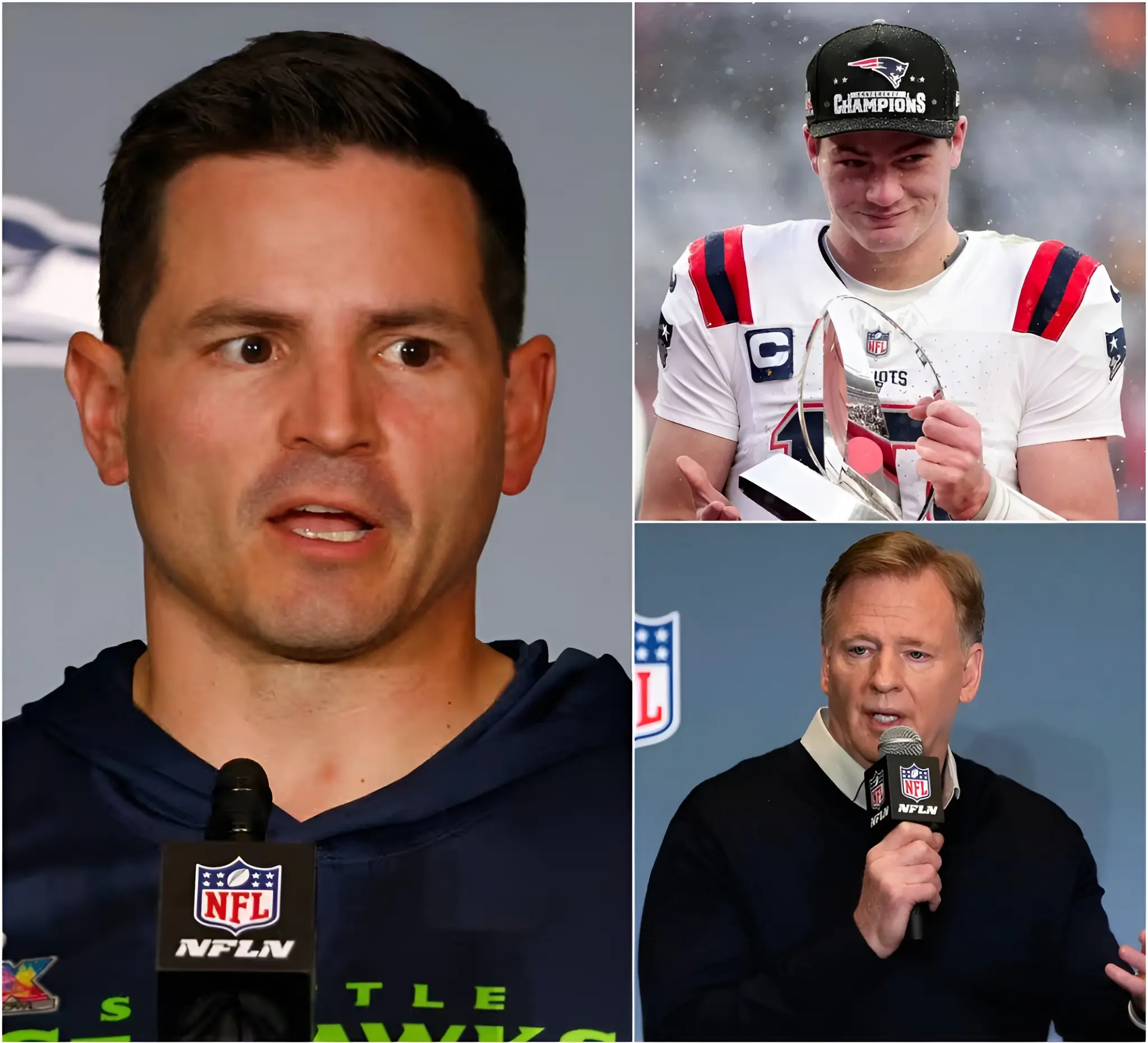
However, just as the tension reached its peak, an unexpected turn of events rocked the football world.
In a surprising and controversial move, Mike MacDonald, the head coach of the Seattle Seahawks, submitted a formal request to NFL Commissioner Roger Goodell for a special doping test on Patriots star quarterback Drake Maye ahead of the highly anticipated Super Bowl LX. The request came after MacDonald reviewed video footage from the conference championship game that raised suspicions about Maye’s post-game activities. According to MacDonald, there were certain moments in the footage that appeared to show unusual behavior from Maye, prompting him to question whether there might be a potential violation of league rules.
The timing of the request was crucial, as it occurred just days before the biggest game of the season, adding a layer of drama and intrigue to an already intense rivalry between the two teams.
MacDonald’s decision to file the request was not one he took lightly. As a coach, he had always prided himself on upholding the integrity of the game and ensuring that his team played under the rules and guidelines set forth by the league. However, his concerns regarding Maye’s activities went beyond just a gut feeling; he had meticulously analyzed the footage and believed there was enough evidence to warrant further investigation. The footage in question showed Maye in what MacDonald described as a “highly unusual” state of physical readiness after the conference championship game.

Despite the intense physical demands of the game, Maye appeared to have recovered incredibly quickly, displaying an energy level that MacDonald believed was inconsistent with the normal recovery process for a player of his caliber.
The suspicion surrounding Maye’s sudden recovery prompted MacDonald to question whether the quarterback might have been using performance-enhancing substances. Given the stakes of the upcoming Super Bowl, MacDonald felt it was his responsibility to ensure that the playing field was level and that no team would gain an unfair advantage through the use of illegal substances. The NFL’s policy on doping was clear: any player found guilty of violating these rules would face severe penalties, including suspension and possible disqualification from the game.
MacDonald, as a coach who had spent years cultivating a team based on hard work and discipline, was determined to see that the game was played fairly and without the influence of illegal enhancements.
Upon submitting the request to Roger Goodell, MacDonald made a public statement explaining his reasoning behind the action. “As a coach, my primary concern is the integrity of the game. We’ve worked too hard to get here, and I know the Patriots have as well. But if there’s any doubt about the fairness of the competition, it needs to be addressed.
I believe that every player should be held to the same standard, and no one should have an unfair advantage—especially in a game of this magnitude.” MacDonald’s words resonated with many fans and analysts, some of whom praised his commitment to fairness, while others questioned whether the request was simply a strategic move to disrupt the Patriots’ preparation for the game.
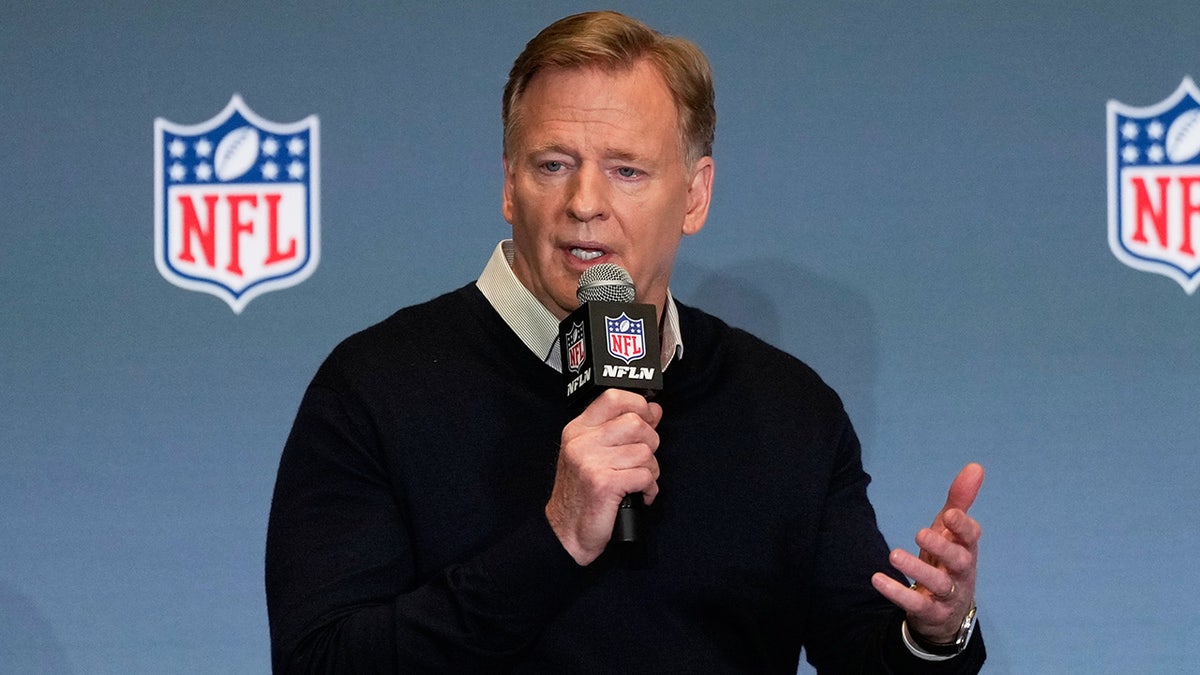
The news of the doping test request quickly spread through the media, sparking a frenzy of speculation and debate. Patriots fans were furious at the accusation, with many voicing their support for their quarterback, Drake Maye. Maye, who had been the heart and soul of the Patriots’ offense throughout the season, was beloved by his fans and teammates alike. His remarkable performance during the conference championship game had earned him praise from all corners of the NFL world, and the suggestion that he might be involved in doping seemed preposterous to many.
Maye himself, however, was noticeably silent on the matter, choosing not to publicly address the allegations. This only fueled further speculation, as fans and pundits alike were left wondering what Maye was thinking as he prepared for the Super Bowl.
On the other hand, Seahawks fans rallied behind MacDonald, applauding his decision to take a stand and ensure that the game was played fairly. They viewed the doping test request as a necessary step to preserve the integrity of the Super Bowl and prevent any potential cheating. Many fans expressed concerns that the growing trend of performance-enhancing drugs in professional sports was becoming more widespread, and they felt that MacDonald’s actions were a bold move to shine a light on this issue.
The Super Bowl had always been a spectacle of athleticism and skill, and they believed that it was crucial to ensure that players succeeded based on their abilities, not through the use of illegal substances.
As the days ticked down to the Super Bowl, the NFL was forced to act quickly. Commissioner Roger Goodell acknowledged the request and announced that Maye would undergo a doping test under league supervision, in accordance with the league’s policies. The test would take place in the days leading up to the Super Bowl, with the results kept confidential until the day of the game. The announcement only added to the drama surrounding the game, as fans and media members anxiously awaited the results of the test.
The prospect of a player being suspended or disqualified from the Super Bowl due to a doping violation was a real possibility, and the thought of such a scenario cast a shadow over what was supposed to be the pinnacle of football competition.
Finally, the moment everyone had been waiting for arrived: the doping test results were released just hours before the Super Bowl kicked off. As the league’s official statement was made public, everyone—including Mike MacDonald—was left stunned. The results revealed that Drake Maye had tested negative for any banned substances, confirming that there was no evidence of doping or rule violations. The news came as a relief to the Patriots organization and their fans, who had been on edge throughout the week leading up to the game.
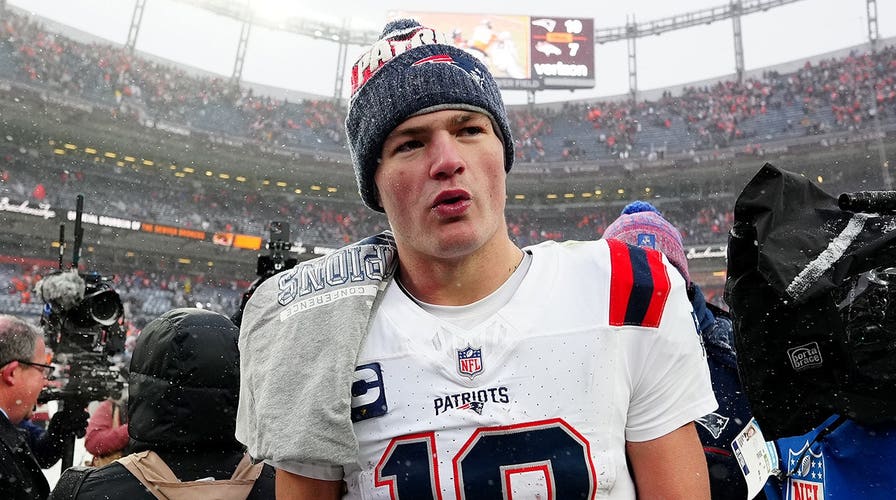
It also came as a surprise to MacDonald, who had expressed his concerns based on the footage and his personal observations. Though the test results cleared Maye of any wrongdoing, MacDonald remained steadfast in his belief that the request had been necessary to maintain the integrity of the game.
Despite the results, the controversy surrounding the doping allegations would not soon be forgotten. The entire situation had cast a long shadow over the Super Bowl, and the question of fairness in sports would continue to linger in the minds of fans and players alike. While the game itself would ultimately be decided by the performances on the field, the off-field drama had added an extra layer of intrigue to the showdown between the Seahawks and the Patriots.
For MacDonald, the decision to file the request had been a matter of principle, and even though the results had cleared Maye, he remained resolute in his stance that the integrity of the game must always come first.
The Super Bowl finally kicked off, and both teams played their hearts out in what would become one of the most thrilling and memorable games in recent history. The allegations of doping and the controversy surrounding the test quickly faded into the background as the game unfolded. On the field, the focus was on the athletes, their performances, and their desire to claim the coveted Lombardi Trophy.
As the final whistle blew and the game concluded, fans and players alike could finally turn their attention to the outcome, knowing that, at least for this year, the Super Bowl had been won fairly and squarely.