
Lamar Jackson Breaks the Silence, Calling Out a Pattern He Says America Can No Longer Ignore
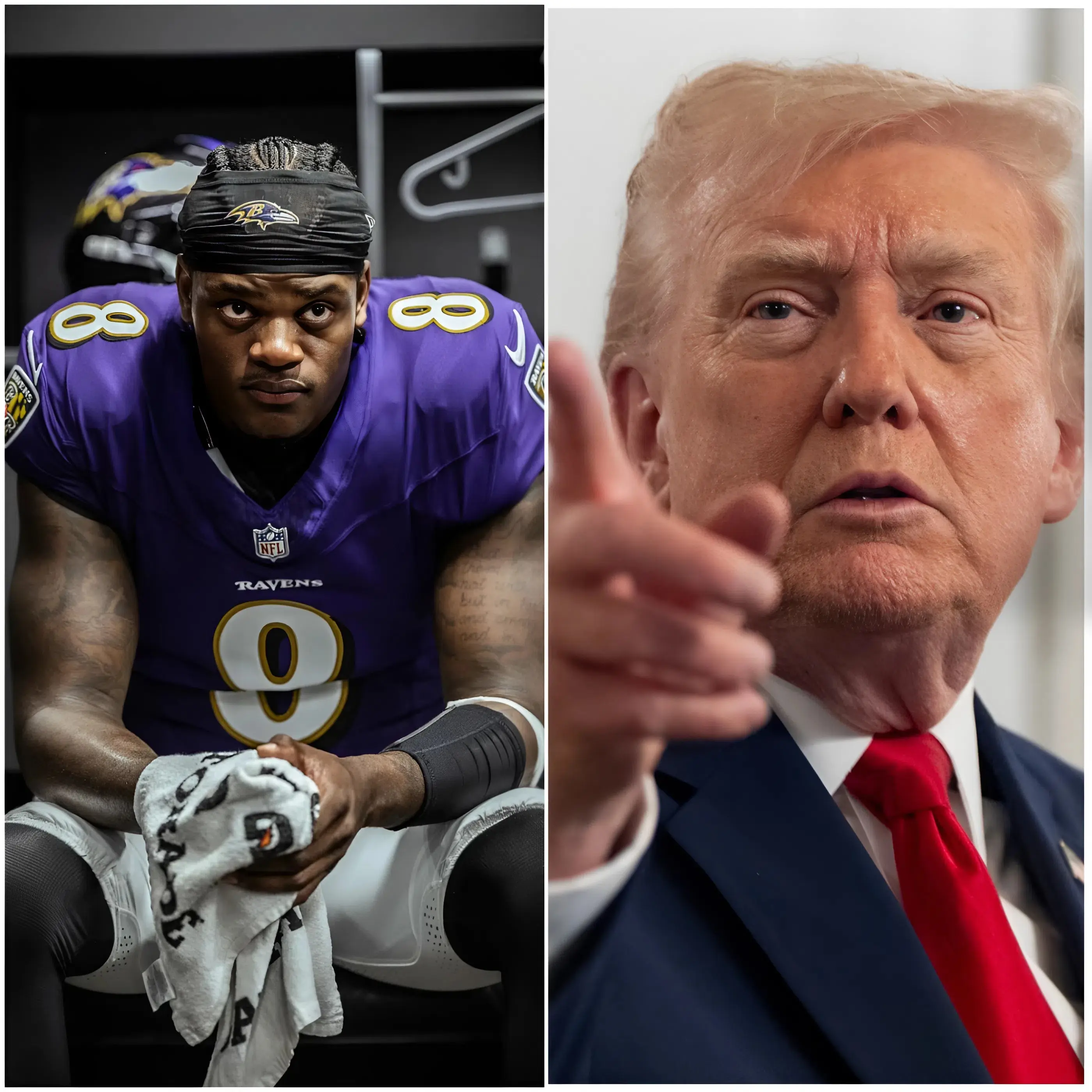
Baltimore Ravens quarterback Lamar Jackson is known for letting his game do most of the talking. On the field, his speed, vision, and calm under pressure have redefined what a modern NFL quarterback looks like. Off the field, he has often chosen restraint over noise, focus over controversy. That is why his latest remarks have landed with unusual force across sports, politics, and social media. Jackson did not hedge, soften his words, or speak in vague generalities. He said what he believed needed to be said, and he stood firmly behind it.
In a moment that quickly went viral, Jackson openly condemned what he described as the consistent and deliberate racism of Donald Trump, rejecting the idea that Trump’s past and present remarks were accidental, misunderstood, or taken out of context. According to Jackson, this was never about one speech, one post, or one controversial quote. It was, in his words, a pattern that has stretched across decades and continues to shape public life in the United States.
Jackson’s comments cut straight to one of the most infamous episodes in modern American history: the Central Park Five case. In 1989, five Black and Latino teenagers were wrongfully accused of assaulting a jogger in New York City. Before the facts were established and long before the young men were exonerated, Trump took out full-page newspaper ads calling for the death penalty. Decades later, even after DNA evidence cleared the men completely, Trump never issued a meaningful apology.
For Jackson, this moment remains impossible to dismiss as a “mistake of the times.” He pointed to it as an early and chilling example of how power, prejudice, and punishment were intertwined.
From there, Jackson connected that history to more recent rhetoric, including Trump’s comments describing African nations in demeaning terms and his repeated attacks on immigrants. Jackson argued that these statements were not isolated slips or crude jokes but part of a worldview that consistently devalues Black lives and communities of color. The quarterback’s message was blunt: when behavior repeats itself across decades, across issues, and across audiences, it stops being coincidence and starts being character.
The reaction was immediate. Supporters praised Jackson for using his platform to speak honestly, especially at a time when many high-profile athletes are criticized for either staying silent or delivering carefully sanitized statements. On platforms like X, Instagram, and Facebook, fans shared clips of his remarks with captions calling them “brave,” “necessary,” and “long overdue.” Many emphasized that Jackson was not speaking as a politician or an activist by profession, but as a Black man reflecting on a public record that has affected people who look like him for generations.
Critics, as expected, pushed back. Some accused Jackson of “bringing politics into sports,” a familiar refrain whenever athletes speak on social issues. Others argued that Trump’s statements have been exaggerated or unfairly framed by the media. Yet even among detractors, there was an acknowledgment that Jackson was not inventing history. The events he referenced are well-documented, from the Central Park Five advertisements to the recorded remarks about immigrants and African countries. The debate, then, was less about whether these things happened and more about how they should be interpreted.
What makes Jackson’s intervention particularly significant is the broader context of athlete activism in the modern era. From Colin Kaepernick’s protest against police brutality to LeBron James’ outspoken criticism of racial injustice, sports figures have increasingly become central voices in national conversations about race and power. Jackson’s comments fit squarely within that tradition, but they also stand out because of his generally low-key public persona. This was not a celebrity seeking attention; it was a star who seemed genuinely compelled to speak after years of watching the same arguments resurface.
There is also the question of risk. The NFL remains a deeply polarized space, with fans spanning the entire political spectrum. Sponsors, teams, and leagues often prefer their biggest stars to remain “neutral,” a term that frequently translates into silence on issues of inequality. By speaking as directly as he did, Jackson knowingly stepped into controversy. That decision, supporters argue, is precisely what gives his words weight. Silence, in this case, would have been easier.
Beyond sports, Jackson’s remarks tapped into a wider cultural moment. As the United States continues to wrestle with its history of racism and its present-day consequences, public figures are increasingly being asked not just where they stand, but why. Jackson did not rely on abstract language or moral grandstanding. He pointed to specific events, specific statements, and a specific timeline, making it harder to dismiss his perspective as emotional or uninformed.
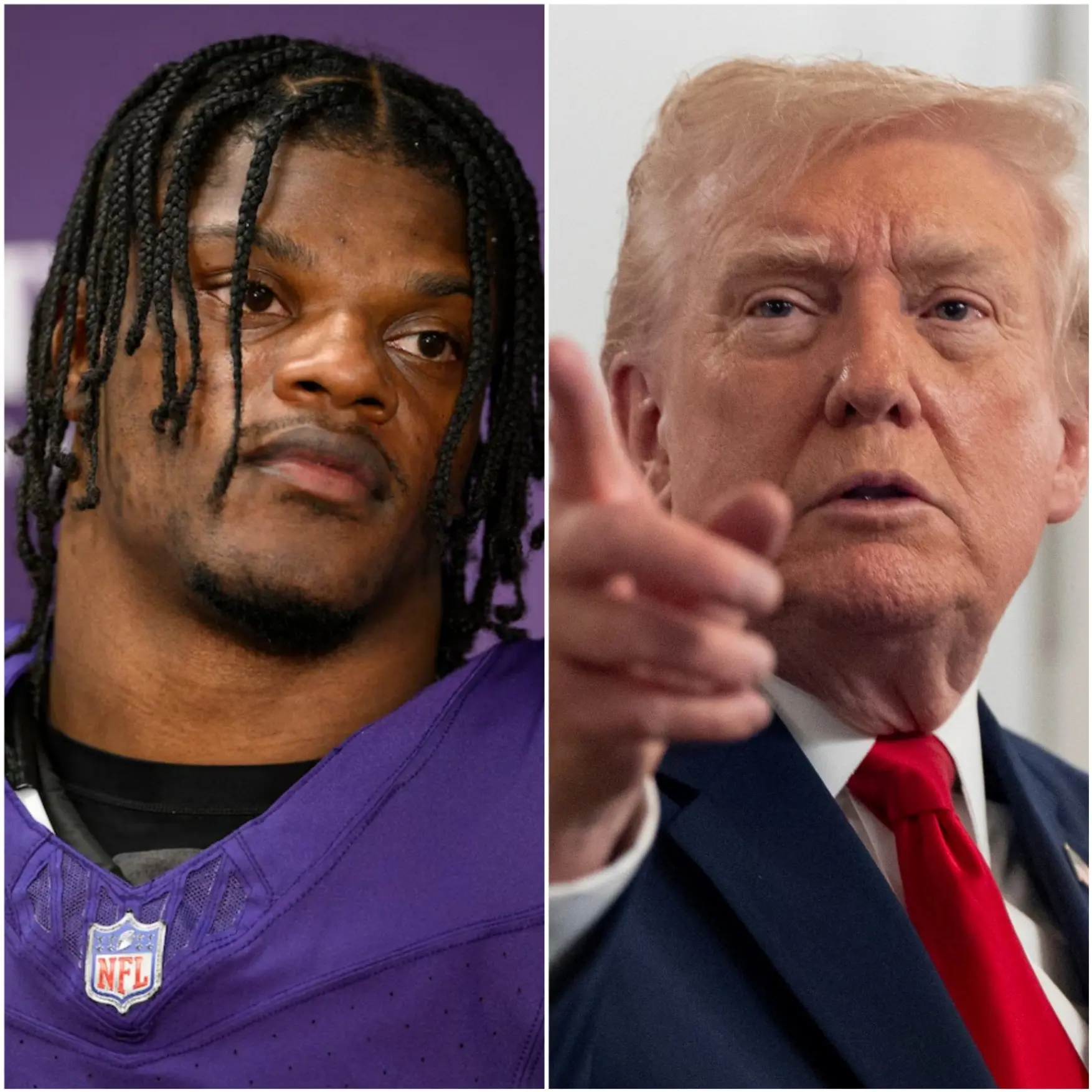
Whether his comments will have a lasting political impact remains to be seen. What is already clear is that they have reignited discussion, particularly among younger audiences who consume news through social media and follow athletes as closely as they follow politicians. In that sense, Jackson’s voice reaches people traditional political commentary often does not.
Lamar Jackson did not claim to be the ultimate authority on American history or racial politics. He did not call for a particular vote or policy. What he did was arguably simpler and more powerful: he refused to accept the rewriting of a public record. By framing Trump’s past and present remarks as a continuous pattern rather than a series of unrelated incidents, Jackson challenged the public to look honestly at history and decide what it says about the present.
In an era of constant noise, his message cut through precisely because it was clear, direct, and grounded in facts many would prefer to forget. For Lamar Jackson, this was not about headlines or hashtags. It was about saying out loud what, in his view, has been visible all along.