
The sports and political worlds collided unexpectedly this week when a single remark ignited a firestorm of controversy, drawing global attention and sparking fierce debate across social media platforms, television networks, and international audiences who were quick to react.
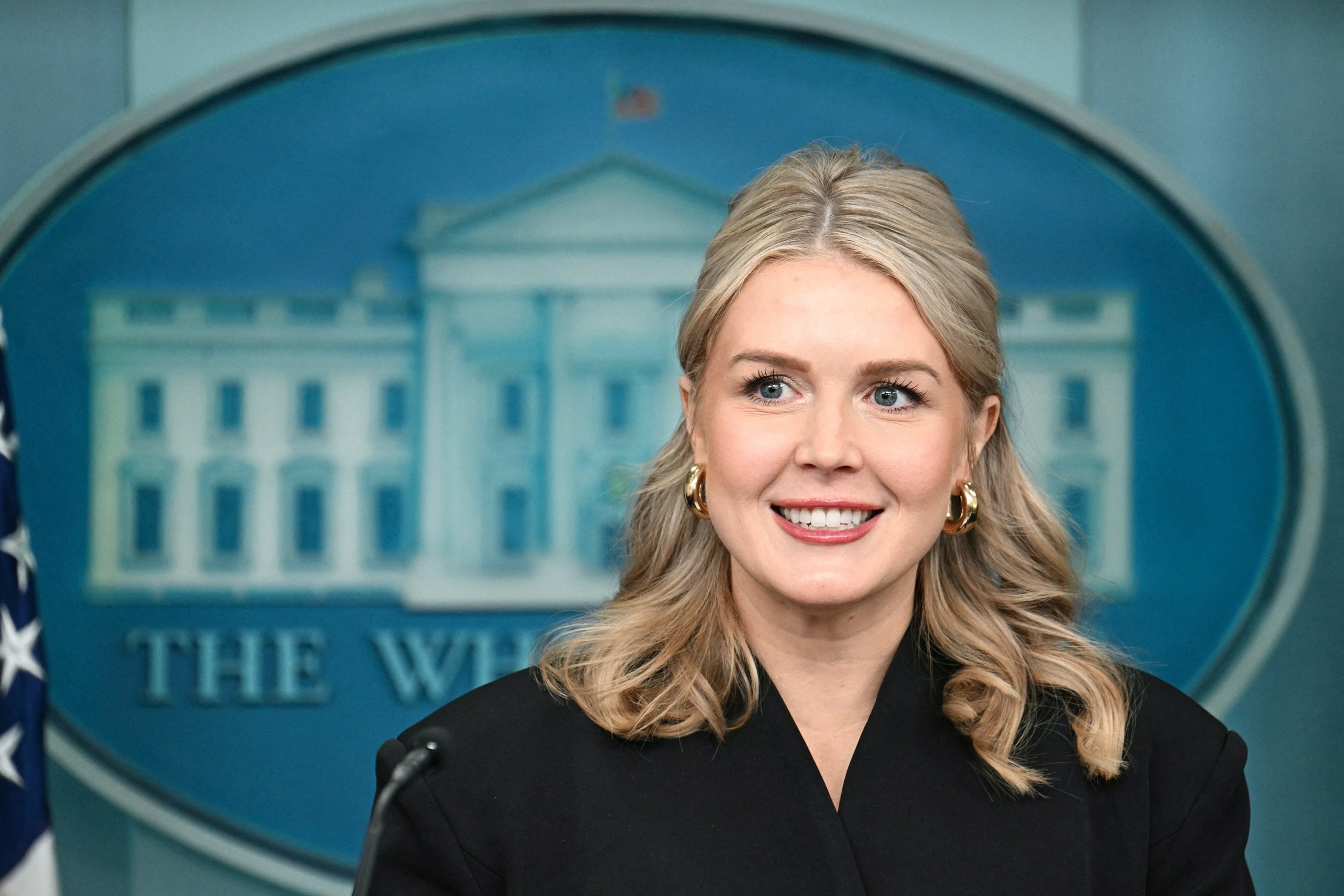
Karoline Leavitt, a rising political figure known for her outspoken views, delivered a comment that many perceived as dismissive and inflammatory, targeting professional tennis player Alex de Minaur in a way that few anticipated would escalate so rapidly.

Her statement, questioning both his origins and worthiness of respect, immediately triggered backlash from fans, commentators, and fellow athletes who viewed the remark as not only unnecessary but also deeply disrespectful toward an accomplished international competitor.
What began as a seemingly isolated comment soon evolved into a widespread media storm, with clips circulating rapidly online and being dissected by analysts who questioned the motivations and implications behind such a pointed and controversial statement.
The situation intensified further when reports surfaced that the President of the United States had recently praised Alex de Minaur, describing him as a remarkable symbol of perseverance and competitive spirit within the global sporting community.
This rare acknowledgment from a political leader elevated the significance of the moment, transforming what might have remained a niche controversy into a broader conversation involving national pride, international recognition, and the intersection between sports and politics.
Observers noted that Leavitt’s remarks appeared to shift in tone following the presidential praise, suggesting a possible reaction to the growing admiration surrounding de Minaur and the attention he was receiving on a global scale.
As criticism mounted, many expected a lengthy or emotional response from Alex de Minaur, whose reputation has long been associated with composure, discipline, and a focus on performance rather than public disputes or personal controversies.
Instead, what followed stunned both supporters and critics alike, as de Minaur chose to respond with a concise, carefully crafted statement that contained exactly twelve words, delivering a message that resonated far beyond its brevity.
Though short, his response carried a sense of calm authority, avoiding direct hostility while still addressing the situation in a manner that many interpreted as both dignified and quietly assertive in the face of criticism.
Within minutes of being shared, the statement spread across platforms such as Twitter, Instagram, and major news outlets, quickly becoming a trending topic as users analyzed every word and debated its meaning and impact.
Supporters praised de Minaur for maintaining professionalism under pressure, highlighting how his restrained approach contrasted sharply with the intensity of the original comment that had sparked the controversy in the first place.
Critics of Leavitt, meanwhile, intensified their responses, arguing that her remarks reflected poorly not only on her personally but also on broader discussions about respect, representation, and the role of public figures in shaping discourse.
Some commentators suggested that the situation underscored a growing tension between political rhetoric and the values often associated with international sports, including respect, unity, and recognition of talent regardless of national background.
Others took a more measured view, emphasizing the importance of open dialogue while cautioning against allowing emotionally charged exchanges to overshadow the achievements and contributions of athletes like de Minaur.

As the debate continued, media outlets around the world began examining de Minaur’s career more closely, highlighting his achievements, work ethic, and the journey that has defined his presence in professional tennis.
This renewed attention brought with it a wave of support from fans who shared messages of encouragement, reinforcing the idea that his response had struck a chord with audiences who value composure and resilience.
Meanwhile, Leavitt faced mounting pressure to clarify or retract her statement, with journalists repeatedly pressing for an explanation or apology as the story continued to dominate headlines and online discussions.
Despite the controversy, some analysts pointed out that moments like these often reveal deeper cultural dynamics, including how public figures navigate criticism and how audiences interpret tone, intent, and authenticity.
The incident also highlighted the power of brevity in communication, as de Minaur’s twelve-word reply demonstrated how a carefully chosen message can carry significant weight without resorting to lengthy explanations or emotional appeals.
For younger audiences especially, the exchange became a case study in contrasting communication styles, showing how restraint and clarity can sometimes be more impactful than more aggressive or impulsive reactions.
As conversations evolved, attention began shifting from the initial remark to the broader implications of the response, with many viewing de Minaur’s handling of the situation as a defining moment in his public image.
In the days that followed, the story continued to generate discussion across multiple sectors, including sports journalism, political commentary, and digital media analysis, each offering different perspectives on what had unfolded.

While controversies often fade quickly in today’s fast-paced media environment, this particular remained relevant due to its combination of political tension, personal dynamics, and the universal appeal of sportsmanship.
Ultimately, the incident served as a reminder of how quickly words can escalate into global conversations, and how the responses that follow can shape narratives in ways that extend far beyond the original moment.
Whether remembered as a controversy or a lesson in composure, the exchange between Karoline Leavitt and Alex de Minaur will likely remain a notable example of how public figures influence and respond to the spotlight.