
The idea of George Kittle being traded from the San Francisco 49ers to the Tennessee Titans lands like a thunderclap precisely because it challenges everything fans believe to be untouchable. Kittle is not just another name on the roster; he is a symbol of the 49ers’ identity, a player whose physicality, emotion, and leadership are woven into the fabric of the team. The mere suggestion of his departure feels destabilizing, forcing the NFL world to confront the possibility that even cornerstone figures are not immune to the cold logic of roster construction.
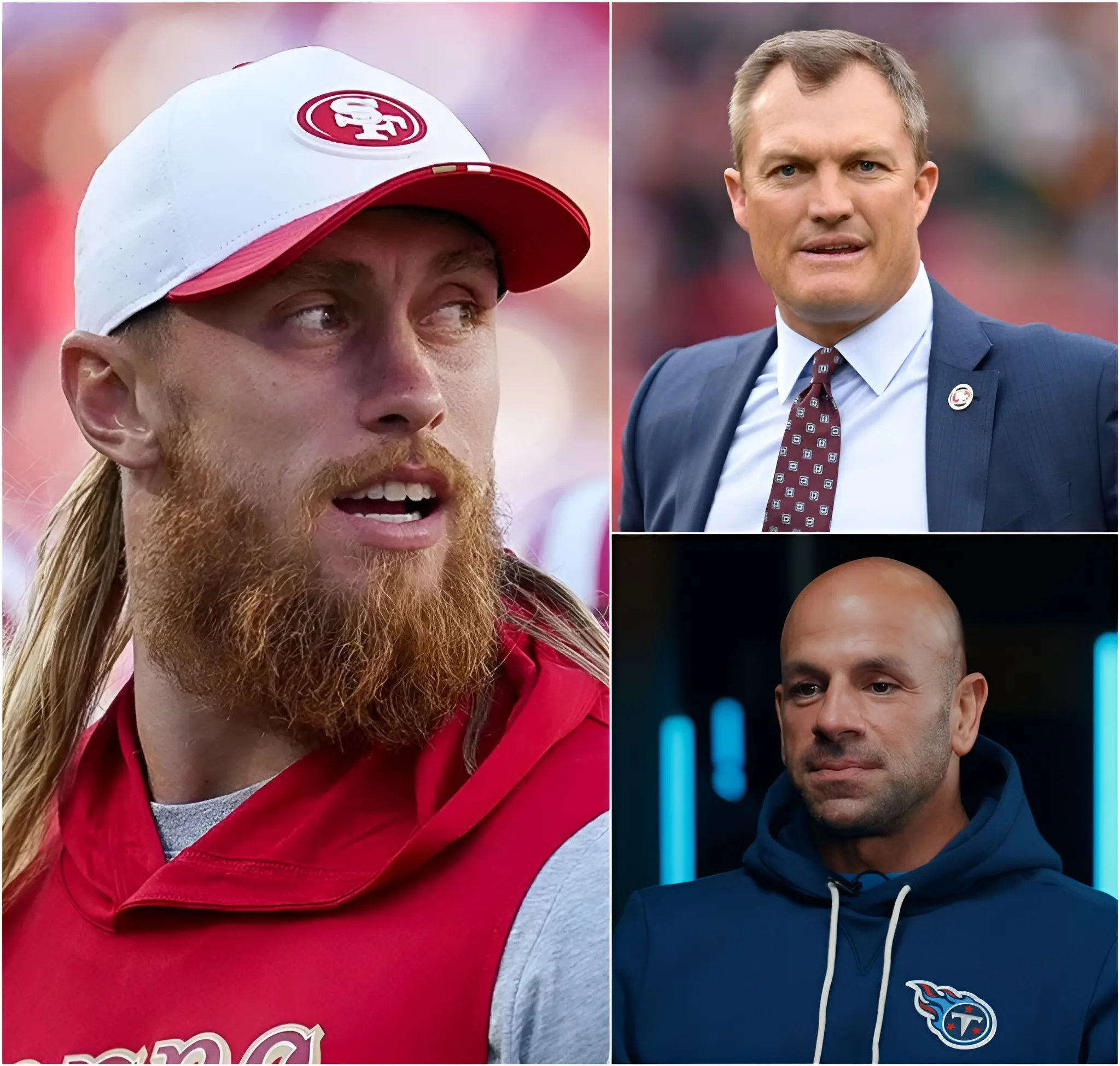
For San Francisco, entertaining such a blockbuster idea would signal a moment of profound introspection. The 49ers are a franchise perpetually balancing the urgency of a championship window against the realities of cap management and long-term sustainability. Trading a player like Kittle would not be about doubting his talent or impact, but about asking whether reallocating resources could extend competitiveness across multiple seasons. That question alone is enough to fracture opinion within league circles and among fans.
Kittle’s value goes far beyond box scores and highlight reels. He is a tone-setter, a tight end who blocks with the ferocity of an offensive lineman and catches passes with the explosiveness of a top receiver. Removing that presence would fundamentally alter how defenses prepare for San Francisco. The offense would lose a gravitational force, someone who draws attention even when he is not the primary target, creating space for others to operate.
At the same time, the NFL has shown repeatedly that emotional attachment rarely dictates front-office decisions. Teams that remain competitive over long stretches are often those willing to make painful, unpopular choices before decline becomes unavoidable. From that perspective, the idea of trading Kittle could be framed as proactive rather than reckless. It would be an acknowledgment that no matter how beloved a player is, timing and value eventually converge.
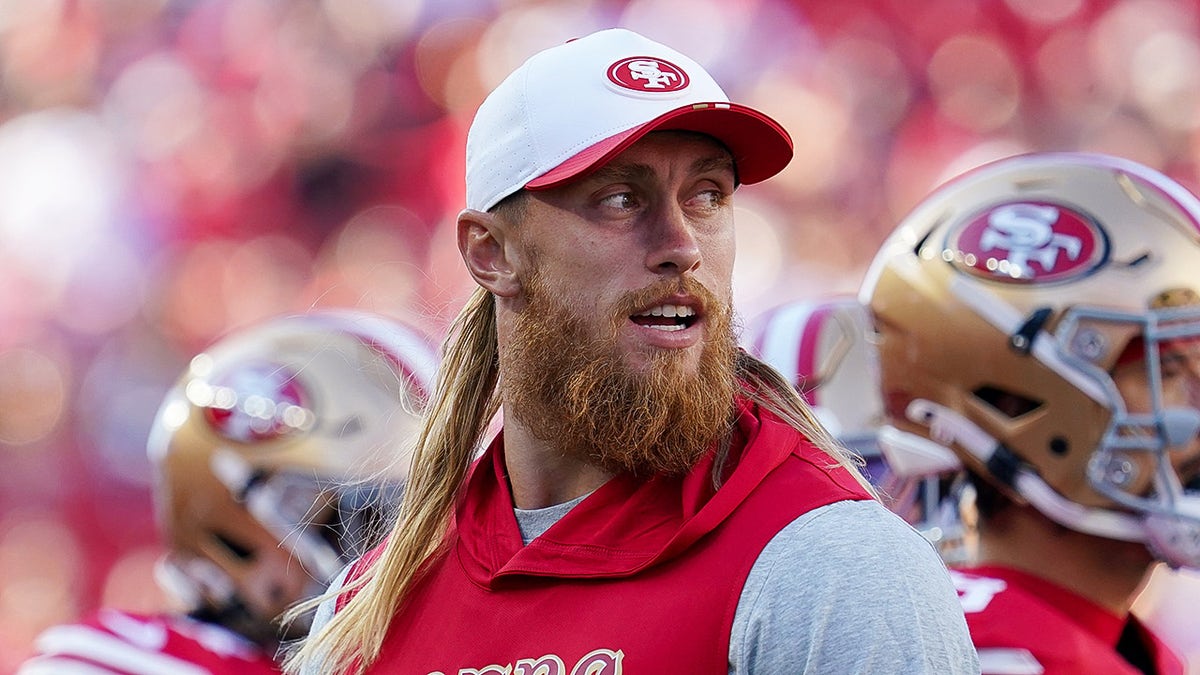
The Tennessee Titans’ reported intrigue only adds fuel to the drama. For a franchise searching for offensive identity and consistency, the prospect of acquiring an elite, battle-tested tight end is undeniably appealing. Kittle would immediately become a focal point, offering not just production but credibility. His arrival could signal a shift in ambition, suggesting that the Titans are prepared to make bold moves rather than incremental adjustments.
From a schematic standpoint, Kittle’s fit in Tennessee would be fascinating. His versatility allows him to thrive in multiple offensive systems, whether as a traditional tight end, a motion piece, or a primary receiving threat. For a Titans offense often criticized for predictability, his presence could unlock new dimensions. Defenses would be forced to respect both his blocking and receiving, complicating game plans in ways Tennessee has not consistently enjoyed.
Yet the cost of such a trade would be enormous, and not merely in terms of draft capital or players exchanged. Bringing in Kittle would raise expectations instantly. The Titans would no longer be viewed as a team in transition, but as one making an aggressive push. That pressure can be galvanizing, but it can also expose weaknesses if complementary pieces are not in place.
For the 49ers, the internal debate would likely revolve around what comes next. Trading Kittle would create a void not easily filled by scheme alone. Leadership, toughness, and emotional edge are qualities that resist replacement. Even if the return were substantial, the question would remain whether the team could replicate his impact through committee or younger talent.
Fans’ reactions would likely be visceral. Kittle embodies the kind of player supporters rally around, someone whose passion feels authentic rather than manufactured. His celebrations, his willingness to embrace physical punishment, and his connection with teammates have made him a fan favorite. Losing him would feel less like a transaction and more like a rupture in continuity.
At the same time, the NFL’s relentless churn has conditioned audiences to expect the unexpected. Iconic players have been traded before, often amid disbelief that later gives way to understanding. The league’s history is filled with moments initially deemed unthinkable that, in hindsight, marked turning points. The possibility of Kittle being moved sits squarely within that tradition of shock giving way to reevaluation.

There is also the financial dimension to consider. Tight ends of Kittle’s caliber command significant cap space, and as rosters become more expensive across the board, difficult trade-offs emerge. San Francisco’s front office would have to weigh the benefits of retaining an elite player against the flexibility gained by redistributing resources. That calculus is rarely popular, but it is often decisive.
For Kittle himself, such a move would represent both disruption and opportunity. Leaving a team where he is deeply embedded would be emotionally challenging, yet joining a new environment could reignite competitive hunger. Veteran stars often speak of the renewed focus that comes with change, the sharpening effect of unfamiliar expectations. In Tennessee, Kittle would not just be continuing a legacy, but helping to define a new one.
The locker room dynamics on both sides would shift dramatically. San Francisco would lose a vocal leader whose presence commands respect, while Tennessee would gain one overnight. Integrating a personality as strong as Kittle’s requires careful management, but it can also accelerate cultural change. His work ethic and intensity could set standards that ripple through the roster.
Media scrutiny would intensify immediately. Every performance, every quote, every gesture would be analyzed for signs of justification or regret. If Kittle thrived in Tennessee, questions would linger about whether San Francisco acted too soon. If he struggled or faced injuries, critics would argue the 49ers made the right call. In that sense, the trade’s legacy would be written not at the moment of execution, but over seasons.
The drama of the idea lies partly in how it forces fans to confront uncomfortable truths about professional sports. Loyalty, while celebrated, is rarely absolute. Teams and players operate within systems governed by value, timing, and opportunity. The romance of continuity often collides with the pragmatism of competition, and when it does, shock is inevitable.
Speculation alone has already achieved something rare: it has disrupted complacency. By imagining Kittle in a Titans uniform, the NFL community is compelled to reassess assumptions about stability and identity. It underscores how quickly narratives can shift, and how thin the line is between permanence and possibility in a league defined by constant motion.
Whether this blockbuster idea ever materializes is almost secondary to its impact as a concept. It has sparked debate, anxiety, and fascination in equal measure. It reminds everyone that no roster is static, no future guaranteed, and no star completely immune to change. That uncertainty is part of what keeps the NFL compelling, even when it is deeply unsettling.
In the end, the thought of George Kittle leaving San Francisco resonates because it touches something fundamental about the sport. It is not just about a player and a trade, but about identity, risk, and the willingness to disrupt comfort in pursuit of ambition. If the idea ever becomes reality, it will be remembered as one of those moments when the league collectively gasped, then leaned forward to see what would happen next.